This article comes from “naturalnews.com”
- Iran has completely closed the Strait of Hormuz, halting a major portion of global oil shipments.
- The closure is a direct retaliation for a U.S. naval blockade of Iranian ports.
- Stranded crews face direct military threats, including gunfire, missiles, and sea mines.
- Shipping companies describe a logistical nightmare with vessels trapped and insurance unavailable.
- The standoff risks a broader conflict as global energy markets are destabilized.
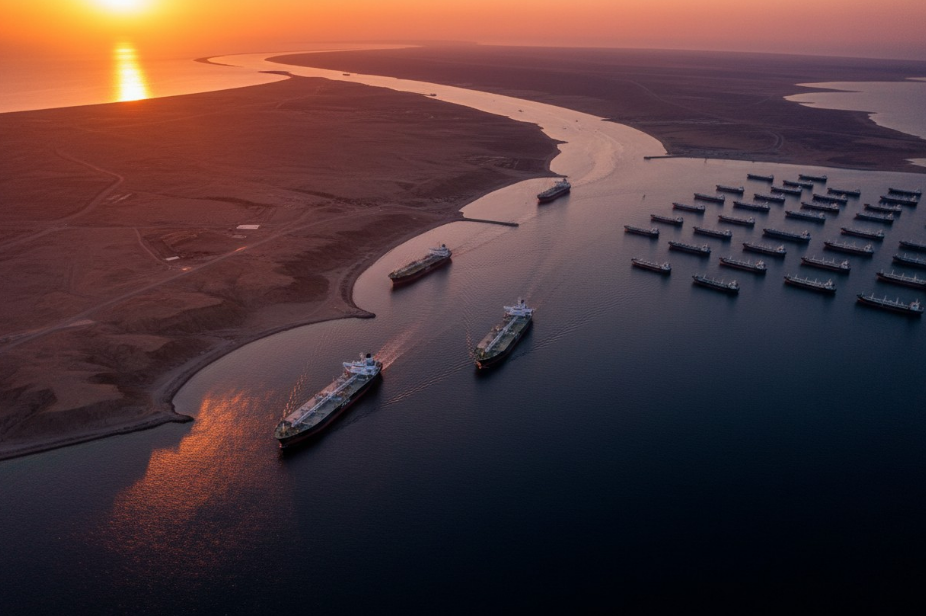
The world’s most important oil chokepoint is now a maritime prison. On April 18, Iran’s Revolutionary Guard Corps sealed the Strait of Hormuz, stranding hundreds of commercial tankers and trapping thousands of sailors in a tense standoff with the United States. This decisive action, a direct response to a U.S. naval blockade of Iranian ports, has halted roughly one-fifth of the globe’s seaborne oil supply and raised the specter of a broader conflict. The closure underscores a brutal reality of modern geopolitics: control over a narrow waterway can be leveraged to hold the global economy hostage.
Audio evidence reveals the immediate danger. A recording released by maritime monitors captures a frantic distress call from the motor tanker Sanmar Herald as it came under fire from Iranian forces. “Sepah Navy! Motor tanker Sanmar Herald! You gave me clearance to go… you are firing now. Let me turn back!” a crew member pleads. Iranian state media confirmed gunboats fired near vessels to force them to turn back, a dramatic enforcement of the closure.
A logistical and human crisis
For the global shipping industry, the closure has triggered a logistical nightmare and a human crisis. Hapag-Lloyd, the world’s fifth-largest container line, has six ships anchored near Dubai with crews stuck for weeks. Nils Haupt, the company’s senior director of communications, outlined the grim situation. “We have been working from Friday afternoon until today with the entire crisis team to bring the vessels out — in vain, unfortunately,” he told Fox News Digital.
The dangers are not merely theoretical. Haupt reported crews are facing direct threats. “One crew experienced a fire on board from bomb fragments. Others have seen missiles or drones near their vessels,” he said. He also cited a “significant risk from sea mines,” which has made insuring vessels for passage nearly impossible. The psychological toll is mounting among the stranded sailors. “The crews are well, but they are becoming increasingly impatient and frustrated,” Haupt added. “They are resilient, but each additional day makes the situation more difficult, more monotonous, and more stressful.”
The Iranian ultimatum
Iran’s position is unequivocal. The Islamic Revolutionary Guard Corps stated the strait would remain closed “until the U.S. lifts its blockade on Iranian ports.” In a statement carried by Iranian media, the IRGC warned, “Approaching the Strait of Hormuz will be considered cooperation with the enemy, and any violating vessel will be targeted.” Iran frames the U.S. blockade as “acts of piracy and maritime theft,” presenting its own actions as a defensive response.
This is not the first time Iran has threatened or disrupted traffic in the strait, but the current total closure represents a significant escalation. The Strait of Hormuz, only 21 miles wide at its narrowest point, is the only sea passage from the Persian Gulf to the open ocean. Its strategic importance has been a cornerstone of Middle Eastern power dynamics for decades, with Iran long recognizing the leverage its geography provides.
The United States has maintained its pressure. U.S. Central Command confirmed that Navy guided-missile destroyers are among assets “executing a blockade mission impacting Iranian ports,” asserting the measures are enforced impartially against all vessels. President Donald Trump dismissed Iran’s tactics, stating the country “can’t blackmail’ the U.S. with threats regarding the waterway. He warned that U.S. attacks would resume if no deal is reached, saying, “So you’ll have a blockade, and unfortunately we’ll have to start dropping bombs again.”
The international community is feeling the ripple effects. India, a nation Iran had labeled “friendly,” summoned the Iranian ambassador to protest a shooting incident involving Indian-flagged vessels, urging Tehran to resume facilitating passage. The confusion is paralyzing shipping globally. Maritime specialist John-Paul Rodrigue noted, “Ships have been attempting transit since the announcement, but it looks like many of them are heading back because the situation is unclear. There is contradictory information being issued by all parties.”
This standoff is a volatile test of wills with the global economy caught in the middle. Historical attempts to secure this passage have always been temporary, as the fundamental imbalance of power – where a regional actor controls a global artery – remains unresolved. The trapped sailors and their echoing distress calls are the immediate human cost, but the real price is being calculated in destabilized energy markets and the looming threat of a conflict that could spill far beyond these strategic waters.
Sources for this article include: