From “technocracy.news”
America’s AI Action Plan was released by the White House in July 2025, and was authored by Michael Kratsios, David Sacks, and Secretary of State Marco Rubio. As I wrote on July 23, 2025, “the third pillar of the report extends the domestic technocratic agenda to the world. By exporting American AI frameworks, hardware standards, and regulatory templates to allies, the Plan seeks to cement a global regime of expert rule.” Pax Silica is the actualization of Pillar III.
Any nation that signs the Pax Silica Declaration will receive all the state-of-the-art AI technology developed by Silicon Valley, BUT in doing so, they will be colonized by the United States. Note that Qatar and the UAE are among the first signers. ⁃ Patrick Wood, Editor.
The formal entry of Qatar and the United Arab Emirates (UAE) into the Pax Silica agreement marks a shift in the direction of Middle Eastern economies and their role in global AI supply chains.
Both countries are now aligned with a coalition led by the US focused on semiconductors, data infrastructure and artificial intelligence.
Pax Silica, also called the “Silicon Declaration,” is a global framework originally launched by the Trump administration. It is designed to strengthen supply chains for advanced chips and AI compute power.
The name refers to the Pax Romana, a long period of Roman imperial stability. “Silica,” the refined material critical to chip production, is substituted in to reflect the central role silicon now plays in global power.
Qatar signed the agreement on 12 January and the UAE is due to follow on 15 January. Both nations join what US officials call a “coalition of capabilities,” alongside the UK, the US, Australia, Israel, Japan, Singapore and South Korea.
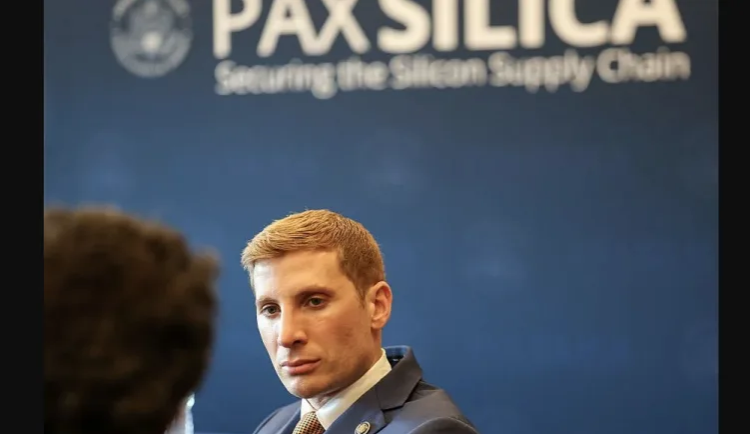
Jacob Helberg, US Under-Secretary of State for Economic Affairs, comments: “If the 20th century ran on oil and steel, the 21st century is going to run on compute and minerals.”
From oil fields to compute farms
The agreement brings with it a framework for what Jacob describes as “silicon statecraft”. The term describes a form of geopolitical influence that moves away from oil wealth and instead leverages sovereign capital and infrastructure to control digital supply chains.
Pax Silica targets three pressure points in AI infrastructure.
First, it focuses on critical minerals. Around 90% of rare earth processing currently sits under Chinese control. These minerals are required for high-end semiconductors and the agreement sets out to build an alternative network more closely aligned with Western partners.
Second, the pact targets energy and compute. Artificial intelligence models require immense computing capacity, which in turn needs consistent and scalable electricity. With vast gas and solar-based energy reserves, the UAE and Qatar can support energy-intensive data centres that house what the industry calls “compute farms” – large-scale facilities where AI models are trained and deployed.
Finally, Pax Silica is built around capital. The Qatar Investment Authority controls approximately US$524bn in assets, while UAE sovereign wealth funds hold more than US$1tn. This capital is being deployed into infrastructure projects that align with the agreement’s aims, including “Stargate,” a US$500bn data centre project involving OpenAI and SoftBank, as well as a US$100bn AI investment venture linking Abu Dhabi’s MGX with BlackRock and Microsoft.
Gulf states are therefore positioned as direct stakeholders in AI innovation. The strategic funding allows them to shift away from energy export dependency and into the development of core technology assets.
Infrastructure, influence and digital alignment
The agreement extends beyond digital assets into physical infrastructure.
A major feature is the upgrade of the India-Middle East-Europe Corridor (IMEC), connecting ports, railways and undersea internet cables between India, the Gulf and Europe. Pax Silica promotes integration of US technology into this corridor to create what the agreement presents as a protected logistics network.
Pax Silica also deepens the relationship between Israel and Gulf states through shared industrial and technological investments. Examples include the Fort Foundry One project in Israel and a proposed 5 gigawatt AI hub in Abu Dhabi. These ventures bind the region together through shared hardware, investment and infrastructure.
While there is no formal enforcement mechanism within Pax Silica, participation does come with conditions. The UAE’s AI company G42 had to sever its Chinese partnerships to finalise a deal with Microsoft. Pax Silica members do not need to break ties with Beijing, but alignment with the agreement involves reducing technological dependence on China.
Jacob adds: “Our strategy is to create a competitive edge so steep, so insurmountable that no adversary or competitor can scale it.”
By combining rare earth access, sovereign funding and data infrastructure, the Pax Silica maps a soft but structured alignment around compute power. The ports and data centres of Doha and Abu Dhabi now sit at the heart of this new global equation.