This article comes from “naturalnews.com”
- DARPA ran a classified program called N3 (Next-Generation Nonsurgical Neurotechnology) to create a portable device that lets soldiers control drones and weapons with their thoughts, without needing brain surgery. The project reached its final phase of human testing in 2023 but has since gone completely silent, with no public results or explanation of what happened.
- The device would scan a soldier’s brainwaves to translate thoughts into commands for machines like attack drones or defense systems. It could also send signals and information back from the machines into the human brain, creating a two-way mind-machine link. Researchers at six top U.S. institutions were funded, and one team confirmed they were testing a “SharpFocus” system on human subjects for high-resolution brain stimulation.
- After reaching Phase III (human trials), DARPA stopped updating the public. The program’s webpage now says it is “complete” and “no longer maintained.” When asked, DARPA gave a vague response, saying it “does not operationalize technologies” and that the research teams will have more details in 2026. The American public, whose tax dollars paid for this, has no idea if the mind-control devices actually worked or if they are now being used in combat.
- The report on this silent mind-control program coincides with claims of other futuristic U.S. weapons. Officials bragged about using unknown “sonic weapons” in a raid on Venezuela, which allegedly caused people to feel like their heads were about to “explode from the inside” and made their noses bleed. Separately, the CIA reportedly used a secret tool called “Ghost Murmur” that can locate a person from miles away by scanning their heartbeat.
- While this technology could give soldiers amazing abilities (like controlling drone swarms without a keyboard), it raises huge dangers. What happens if the tech falls into enemy hands? Without transparency, these risks remain unknown and deeply troubling.
As the White House boasts that the United States is now deploying futuristic military weapons never before seen on the battlefield, newly uncovered details about America’s clandestine attempt to merge soldiers and machines have emerged from the shadows of classified research programs.
The Defense Advanced Research Projects Agency (DARPA), long known as the Department of War‘s”idea factory” for its documented role in creative revolutionary technologies such as the internet, GPS and stealth aircraft, quietly published a report detailing how scientists were working on a new kind of brain-computer interface that would form a direct link between military personnel and weapons of war, all without requiring surgery.
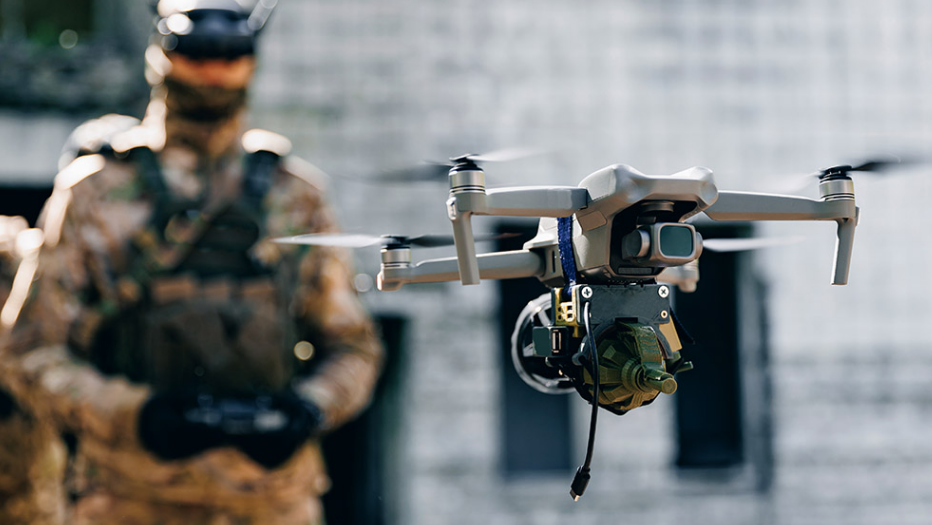
This program, which the agency posted on its public website and listed as “complete,” was geared specifically for “able-bodied service members” to give them direct mind control over military drones and other national security tools. Called the Next-Generation Nonsurgical Neurotechnology (N3) program, DARPA stated this breakthrough would provide the military with a “portable” device capable of reading the user’s brain signals and also sending messages from drones back into the human brain.
Despite these bold claims, the project, first announced in 2018, has mysteriously gone silent after reaching the third and final stage of development, which involved testing the device on real human beings.
BrightU.AI’s Enoch AI engine explains that since July 2023, there has been no official word on what happened, whether the devices were successful or if American soldiers are currently using this technology to control military aircraft with their thoughts.
The disturbing silence of Phase III
The N3 program provided funding to six research teams in 2019, including Battelle Memorial Institute in Ohio, Carnegie Mellon University in Pennsylvania, Johns Hopkins University Applied Physics Laboratory in Maryland, Rice University in Texas and California’s Palo Alto Research Center and Teledyne Scientific. Researchers structured the project into three phases of development.
The first 12-month phase tested the basic components for reading and recording brain signals and sending signals back into the brain.
Phase II lasted 18 months and involved the teams integrating those components into a working system and testing them in living animals to determine if the system could actually read from and write to the brain safely and effectively.
The third phase, also scheduled to last 18 months, focused on refining the futuristic device, enhancing its performance to send signals faster and finally starting human trials for military applications.
But once the project reached Phase III, the mystery began. There has been no word on the outcome of those human trials in three years.
A July 20, 2023 report from Carnegie Mellon University provided rare insight into the N3 project, confirming that scientists were indeed testing the mind control device on living people. “Now in Phase 3, the team has initiated testing on human subjects,” the press release revealed.
Carnegie Mellon also noted that their team’s specific technique for high-resolution, noninvasive brain stimulation, nicknamed “SharpFocus,” appeared to achieve what the government had set out to accomplish for national security purposes. Researcher Derya Tansel stated that high-density patches designed for rodents, monkeys and humans all provided strong evidence that the team’s strategies represented “radical improvements over what is possible today.”
Despite this reported breakthrough, DARPA’s current webpage for the N3 program only states the goal of the research. It also ominously notes: “This content is available for reference purposes. This page is no longer maintained.”
When pressed for answers, DARPA told reporters that the agency’s “effort in this program is complete.”
In a carefully worded statement, DARPA added that it “does not operationalize technologies” and claimed that the six research teams handling the experiments would have the most up-to-date knowledge on the technology’s usage in 2026.
A pattern of secrecy and unprecedented weapons
While countless government research projects remain a mystery to the public, the Trump administration has made it publicly known that American military hardware remains state-of-the-art and far ahead of any potential adversary.
President Donald Trump himself boasted about the technological superiority of the American military during his second term in office, specifically during the conflicts in Venezuela and Iran. On Jan. 20, Trump bragged: “We have weapons nobody else knows about. And, I say it’s probably good not to talk about it, but we have some amazing weapons.”
This discovery of the silent brain-machine program comes as the United States confirmed it had used futuristic “sonic weapons” in the raid to capture Venezuelan President Nicolas Maduro, and a secret Central Intelligence Agency (CIA) tool helped locate an American pilot shot down over Iran by his heartbeat alone.
In January, Press Secretary Karoline Leavitt took to social media to share an interview with an unnamed Venezuelan security guard who claimed to be working the night the U.S. struck President Maduro’s compound in Caracas. The guard reported feeling like his head was “exploding from the inside” and that everyone began bleeding from the nose and vomiting blood before falling to the ground, unable to move.
The security guard also claimed that moments before the raid that captured Maduro, all radar systems shut down without explanation.
Then eight helicopters arrived and around 20 soldiers descended. “They didn’t look like anything we’ve fought against before,” the guard claimed. According to the unverified account, the 20 U.S. soldiers “killed hundreds of us.”
Three months later, the CIA used a secret tool dubbed “Ghost Murmur” to find the American airman who had been shot down over Southern Iran during U.S. military strikes.
According to sources familiar with the technology, this futuristic device uses “long-range quantum magnetometry” to find even the faintest heartbeats. The tool reportedly scans for the subtle electromagnetic fingerprint of the human heart, with data filtered through AI software to isolate an individual signature from background noise.
The dangers of merging man and machine
Current brain interfaces, such as those developed by Elon Musk’s Neuralink company, have mostly been limited to medical patients battling paralysis or confined to laboratory settings because the devices must be implanted into a patient’s brain through invasive surgery.
DARPA set out to make powerful brain-tech safe, portable and practical enough to be used by healthy people, starting with the military, but potentially opening the door for broader real-world usage later.
The implications of this technology are deeply troubling for those concerned with individual liberties and the preservation of human autonomy. With a non-surgical neural interface, an American soldier could send out swarms of attack drones, defend computer systems against cyber attacks or ensure efficient lines of communication all without lifting a finger or speaking a word.
But what happens when this technology falls into the wrong hands? What safeguards exist to prevent the government from using such devices on its own citizens?
And what are the long-term health effects of having a machine constantly reading and writing to the human brain?
These questions remain unanswered as DARPA’s N3 program sits in an unexplained state of completion, its results unknown to the American public whose tax dollars funded the research. The American people deserve transparency about whether mind-controlled weapons systems are currently being deployed in combat zones around the world.
Watch this clip about a DARPA official who publicly admitted that Neuralink is “old tech” and that the agency has officially achieved brain control.
Sources include: