From “technocracy.news”
Imagine yourself owning a house. It’s yours. You have the deed. You can live in it, paint the walls, rent it out, sell it to anyone you choose, or give it away. Nobody can change the terms of your ownership after you buy it. The deed is recorded at the county courthouse, and no company or platform operator can alter it without your consent and a judge’s order. That is ownership.
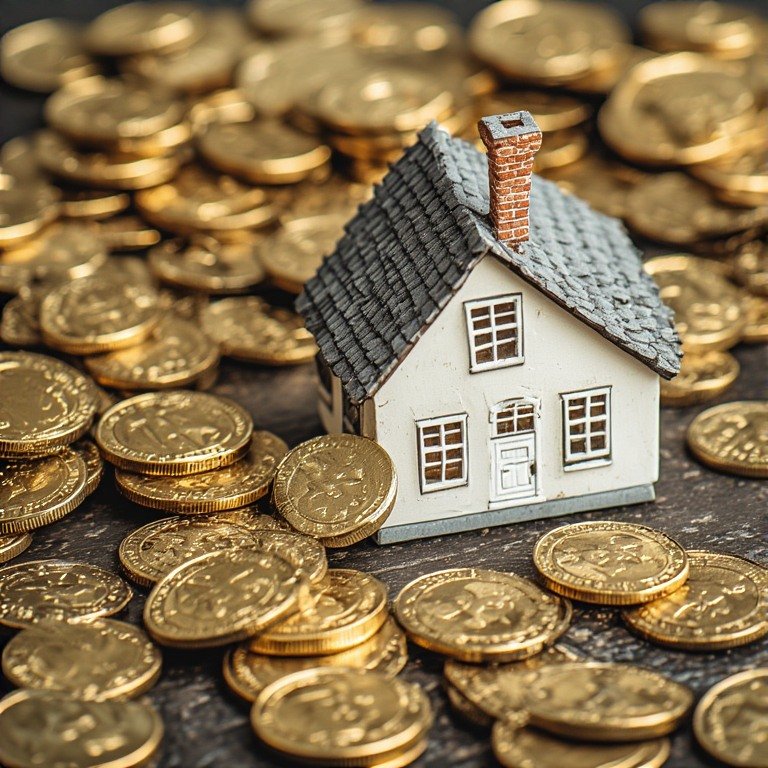
Now imagine someone tells you there’s a better way. Instead of holding that deed, your house will be converted into a digital token on a computer network. They call this “tokenization.” The token represents your house — or more precisely, it represents a fraction of your house, because the whole point is to divide the property into thousands or even millions of tiny digital pieces that anyone in the world can buy. You might own the equivalent of one ten-thousandth of a building.
They tell you this is exciting because it “democratizes” real estate — now everybody can be an “owner.”
But that is a lie. It switches definitions in mid-sentence. Owning a “token” is not the same thing as owning a house.
Let’s break this down.
First, the token is not the property.
You cannot live in your token. You cannot improve it, fence it, or hand the keys to your children. You hold a digital entry on someone else’s computer system that says you have a claim on a fraction of the house. If the house burns down, gets condemned, or gets seized by a government, your token doesn’t protect you the way a deed and an insurance policy would. The token is only as good as the platform it sits on and the rules that platform enforces.
“Trust us”, they said, “It’s just like ownership.”
Second, there is no guaranteed marketplace to resell your token.
When you own a house today, you can sell it. There are real estate agents, listing services, and a legal system that enforces the transfer. When you own a stock, you can sell it on an exchange where millions of buyers and sellers meet every day. But tokenized assets do not have that kind of market.
There is no New York Stock Exchange for fractions of apartment buildings in Dubai or farmland in Nebraska. If you want to sell your token, you need to find a buyer on whatever platform issued it — and if that platform is small, illiquid, or shut down, your token may be worth nothing, not because the building lost value but because there is nobody to buy your fraction of it. You’re holding a ticket to a theater that may not exist tomorrow.
“Trust us”, they said. “We will be there for you when you decide to sell.”
Third, the people who run the platform can change the rules after you buy in.
A deed recorded at the courthouse cannot be altered by the title company. But a digital token operates under a “smart contract,” which is just a set of computer instructions written by the platform operator. That operator can update the contract. They can change the fee structure, alter the revenue-sharing formula, impose new conditions on transfers, freeze your token if you fail a compliance check, or delist the asset entirely. When they do, your “ownership” changes without your consent — because you never owned the asset in the first place. You owned a permission, granted by a platform, subject to rules you didn’t write and cannot negotiate.
“Trust us”, they said. “We won’t change the rules of ownership.”
This is the difference between owning a home and owning tokens. Property rights are protected by law, enforceable in court, and cannot be changed unilaterally by a third party. Platform access is granted by an operator, governed by terms of service, and revocable at any time for any reason the operator defines.
The end-game of tokenization:
- The county courthouse is replaced with a server farm.
- The deed is replaced by a smart contract.
- The owner is replaced by a “user”.
And the “user” holds his position only as long as the platform operator permits it.
The centuries-old system of ownership has been redesigned so that true ownership — permanent, unconditional, and transferable at will — no longer exists.
“Trust us,” they said. “You will be happy.”
There have been con men throughout history. They promise one thing and then deliver another. Tokenization is the modern version of the bait-and-switch game. Take a lesson from Mary Howitt’s famous poem, written as a cautionary tale for children in 1828.
Spider and the Fly
Mary Howitt (1828)
“Will you walk into my parlor?” said the spider to the fly;
“‘Tis the prettiest little parlor that ever you may spy.
The way into my parlor is up a winding stair,
And I have many curious things to show when you are there.”
“Oh no, no,” said the little fly; “to ask me is in vain,
For who goes up your winding stair can ne’er come down again.”
“I’m sure you must be weary, dear, with soaring up so high.
Well you rest upon my little bed?” said the spider to the fly.
“There are pretty curtains drawn around; the sheets are fine and thin,
And if you like to rest a while, I’ll snugly tuck you in!”
“Oh no, no,” said the little fly, “for I’ve often heard it said,
They never, never wake again who sleep upon your bed!”
Said the cunning spider to the fly: “Dear friend, what can I do
To prove the warm affection I’ve always felt for you?
I have within my pantry good store of all that’s nice;
I’m sure you’re very welcome – will you please to take a slice?”
“Oh no, no,” said the little fly; “kind sir, that cannot be:
I’ve heard what’s in your pantry, and I do not wish to see!”
“Sweet creature!” said the spider, “you’re witty and you’re wise;
How handsome are your gauzy wings; how brilliant are your eyes!
I have a little looking-glass upon my parlor shelf;
If you’d step in one moment, dear, you shall behold yourself.”
“I thank you, gentle sir,” she said, “for what you’re pleased to say,
And, bidding you good morning now, I’ll call another day.”
The spider turned him round about, and went into his den,
For well he knew the silly fly would soon come back again:
So he wove a subtle web in a little corner sly,
And set his table ready to dine upon the fly;
Then came out to his door again and merrily did sing:
“Come hither, hither, pretty fly, with pearl and silver wing;
Your robes are green and purple; there’s a crest upon your head;
Your eyes are like diamond bright, but mine are dull as lead!”
Alas, alas! how very soon this silly little fly,
Hearing his wily, flattering words, came slowly flitting by;
With buzzing wings she hung aloft, then near and nearer grew,
Thinking only of her brilliant eyes and green and purple hue,
Thinking only of her crested head. Poor, foolish thing! at last
Up jumped the cunning spider, and fiercely held her fast;
He dragged her up his winding stair, into the dismal den –
Within his little parlor – but she ne’er came out again!
And now, dear little children, who may this story read,
To idle, silly flattering words I pray you ne’er give heed;
Unto an evil counselor close heart and ear and eye,
And take a lesson from this tale of the spider and the fly.