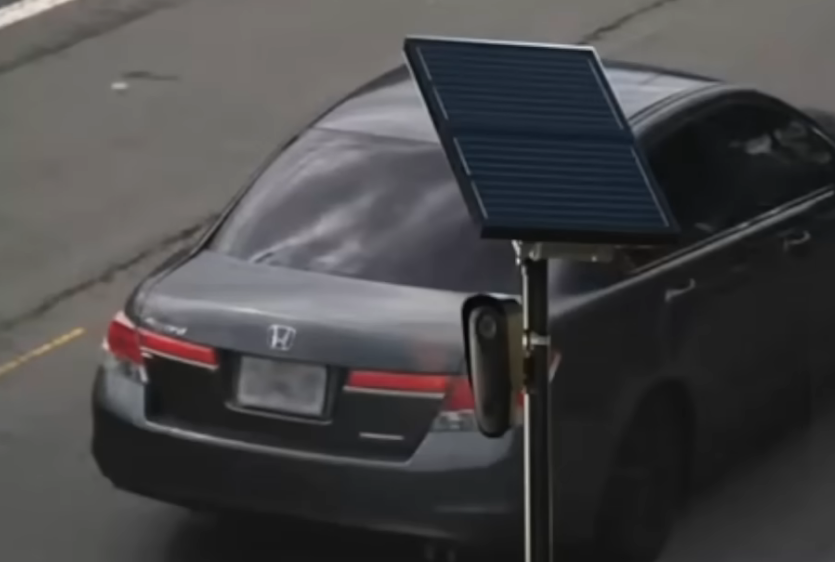
From “Yahoo News”
Police departments are adopting policies advising officers not to disclose when a traffic stop was prompted by a Flock Safety camera or another Automatic License Plate Recognition (ALPR) system.
A report found that license plate reader data is treated as confidential, meaning officers and prosecutors can withhold details about how a vehicle was identified. There is currently no federal or state law requiring law enforcement to disclose the use of ALPR technology during a traffic stop.
According to the report, ALPR information is generally treated as investigative intelligence, allowing officers to use it without explaining how the vehicle was identified during a stop.
However, the policy has raised privacy concerns, with critics warning that people could be tracked without their knowledge and have little way of knowing whether license plate reader technology was involved in a stop.
Police Departments Are Being Advised Against Mentioning ALPR Usage in Their Reports
Police departments and sheriffs are now adopting formal policies that officers should not mention ALPR usage to vehicle occupants, or even put it in their reports.
Pictured: Wapello County, IA, sheriff's Flock policy; Altoona, IA, PD training materials. pic.twitter.com/5F1pX5mdE2
— Have I Been Flocked? (@HIBFlocked) August 1, 2026
A post by @HIBFlocked on X shared what appear to be screenshots of police department training materials instructing officers not to disclose ALPR usage to occupants of a vehicle during a traffic stop or in a report unless necessary.
One image instructs officers to treat ALPR information as an intelligence lead that has been verified before taking enforcement action. While this may raise concerns for some readers, most laws focus on how the data is collected, stored, and used.
A report by Gadget Review cites Washington state’s SB 6002, which limits where Flock Safety cameras can be installed, such as near schools, health clinics, and immigration facilities. However, the law does not require officers to tell motorists if ALPR data played a role in a traffic stop.
At the federal level, there are also no laws requiring police to disclose the use of ALPR technology during a stop. Most state laws deal with how long license plate data can be kept and who is allowed to access it, rather than informing drivers.
Privacy advocates say this lack of transparency is concerning. Organizations such as the American Civil Liberties Union (ACLU) argue that ALPR data can reveal where people worship, seek medical care, attend political events, or spend their time, creating a detailed record of their movements.
Law enforcement agencies, however, maintain that ALPR systems are valuable tools for recovering stolen vehicles, locating missing people, and identifying suspects. Police organizations say the technology is used under established policies and legal guidelines.
Even so, those internal policies generally do not require officers to explain whether ALPR data led to a traffic stop. As a result, most drivers may never know if license plate reader technology was involved in the decision to pull them over.