This article comes from “naturalnews.com”
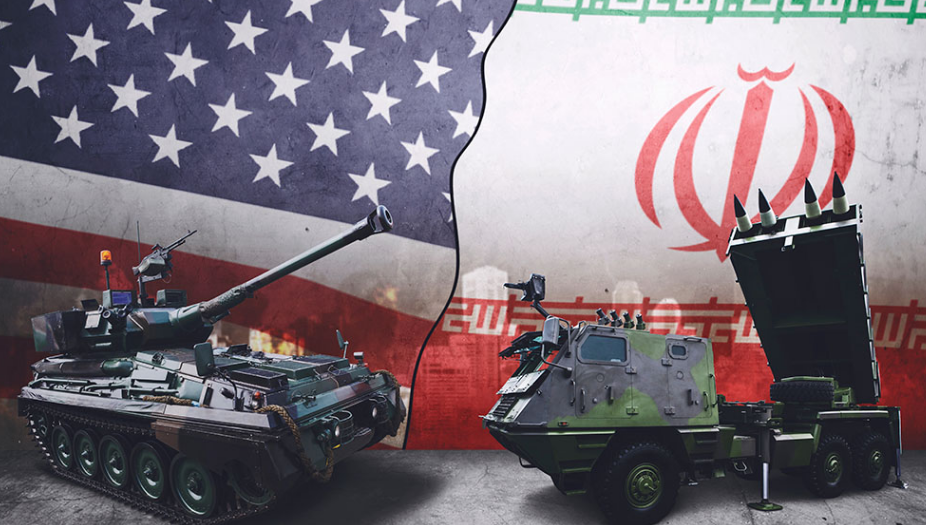
In a stunning reversal that exposes the hollow theater of American military might, President Donald Trump’s administration now finds itself negotiating for what it claimed to have already destroyed. After the much-hyped “Operation Midnight Hammer” in 2025, which U.S. officials boasted had “seriously crippled, and possibly destroyed” Iran’s nuclear program, the United States is now reduced to asking Tehran to hand over its enriched uranium — a tacit admission that the bombing campaign was a failure. The truth is far more troubling: America’s projection of strength is increasingly a delusion, a propaganda show for domestic consumption, while the U.S. government simultaneously funds both sides of the Middle East conflict, drives the world toward nuclear war, and begs its declared enemy for the very material it claims to have confiscated. The empire is not just stumbling; it is negotiating from weakness, while pretending to win.
Key points:
- Operation Midnight Hammer was sold as a decisive strike that destroyed Iran’s nuclear weapons program, but the U.S. is now negotiating to receive Iran’s enriched uranium.
- President Trump admitted the uranium “goes to the United States” as part of a potential deal, contradicting claims that the program was obliterated.
- The U.S. military posture in the Middle East is increasingly theatrical, designed for domestic political optics rather than strategic effectiveness.
- Iran continues to control the Strait of Hormuz and has demonstrated the ability to bypass U.S. air defenses, exposing American vulnerability.
- The pattern of escalating conflict, empty threats, and negotiated surrender of core objectives reveals a profound strategic incoherence in U.S. foreign policy.
The anatomy of a lie: Operation Midnight Hammer’s empty victory
The official narrative around Operation Midnight Hammer was a masterpiece of propaganda. Seven B-2 stealth bombers, 160 supporting aircraft, a submarine, and hundreds of service-members delivered 14 massive ordnance penetrators into Iran’s nuclear infrastructure at Fordow, Natanz, and Isfahan. The operation was hailed as a decisive blow that “seriously crippled, and possibly destroyed” Iran’s nuclear ambitions. Secretary of State Marco Rubio declared the strikes “not an act of war, but the prevention of a nuclear Iran.”
Yet the reality on the ground tells a different story. Iran continues to enrich uranium. The United States is now negotiating not to confiscate weapons, but to receive Iran’s highly enriched uranium as part of a deal that would also require Tehran to shut down its underground facilities. When PBS reporter Liz Landers asked Trump whether Iran might export its uranium “perhaps, to the United States,” Trump corrected her: “No, not perhaps. It goes to the United States.”
This is not the language of a victor dictating terms to a defeated enemy. This is the language of a supplicant making concessions. The bombing campaign, far from eliminating the threat, appears to have accomplished little more than killing civilians and destroying rural buildings that U.S. intelligence conveniently labeled “command and control centers.” The real nuclear capability remains intact, and the U.S. now finds itself begging for what it claims to have already taken.
Strait of Hormuz: Where American power meets its limit
The delusion extends beyond nuclear negotiations. Iran controls the Strait of Hormuz, the choke-point through which 20% of the world’s oil passes. U.S. naval forces, despite their technological superiority, have proven capable of precision missions, but incapable of securing the entire waterway. In January 2025, a cruise missile fired by Houthi rebels came within one mile of the U.S. Navy destroyer USS Gravely, forcing the ship to deploy its close-in weapons system for the first time since the conflict began. The missile penetrated defenses that were supposed to intercept threats at eight miles or more.
This near-miss exposed a critical vulnerability. American destroyers, designed to project power globally, are struggling against relatively primitive anti-ship missiles fired by non-state actors. Iran, which supplies these weapons, watches and learns. The message is clear: American air defenses are porous, and the cost of challenging U.S. naval dominance is far lower than Washington admits.
Trump’s own words betray the anxiety. When Landers asked about the Strait of Hormuz, Trump pivoted to market predictions: “I predicted, what, exactly what happened. A lot of people predicted oil is gonna go up to $300, $350. Well, it said $100 right now.” The president was boasting that oil prices did not spike as feared, but his defensive tone revealed an administration that knows its military options are limited, and oil has spiked anyway. The threat of “bombing the hell out of them” rings hollow when the U.S. cannot even secure international shipping lanes.
Who really controls the narrative?
The media coverage of these events has been complicit in maintaining the illusion. When U.S. Central Command announced the destruction of Iranian nuclear facilities, few outlets questioned the claim that a bombing campaign could permanently end a program that has survived decades of sabotage, cyberattacks, and assassination of its scientists. When Trump now says the uranium “goes to the United States,” the press reports it as a diplomatic victory rather than an admission that the previous strategy failed.
The truth is that the United States is no longer the unchallenged hegemon it once was. Iran has adapted. Russia has adapted. China has adapted. Even non-state actors like the Houthis have adapted. The U.S. military machine, magnificent as it appears in promotional videos, is increasingly ineffective against adversaries who do not fight on American terms. The empire is running out of options, and the rhetoric of strength is now a mask for weakness.
Trump’s comment that “it’s got a very good chance of ending, and if it doesn’t end, we have to go back to bombing the hell out of them” perfectly captures the intellectual bankruptcy of current U.S. policy.
Sources include: